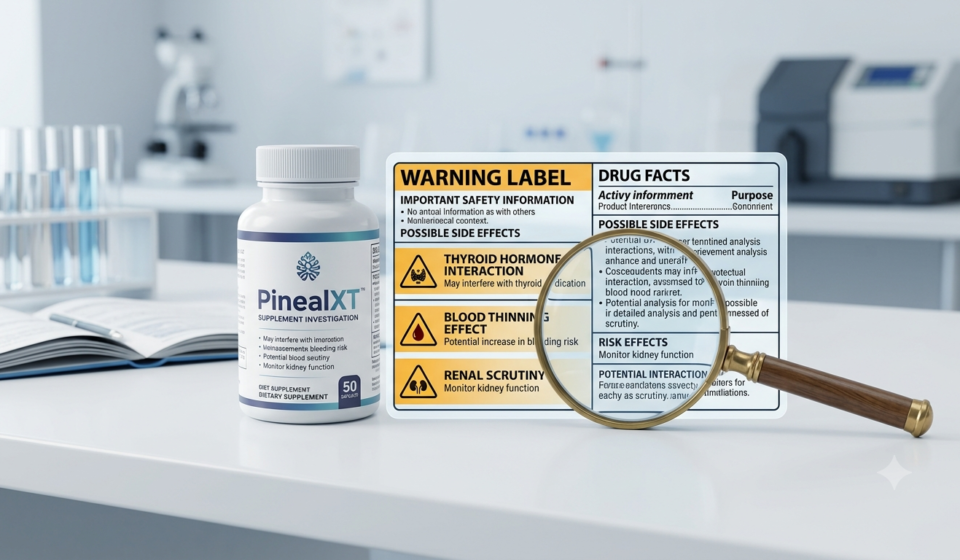

If you’re searching for PinealXT side effects before ordering, you’re doing the smart thing — most of what’s published about this supplement online focuses on the sales pitch, not the ingredient-level safety details. This article breaks down what’s actually in PinealXT, what’s known about each ingredient individually, who should be cautious, and what the “pineal gland activation” framing actually means versus what’s scientifically established.
One thing to be clear about upfront: the pineal gland “detox” and “decalcification” concept used in PinealXT’s marketing isn’t a recognized medical process, and claims about “activating” psychic ability or manifestation aren’t things a supplement can do. That’s the brand’s positioning, not a scientific claim — so I’m not going to repeat it as fact anywhere in this article. What I can do is walk through the seven disclosed ingredients honestly, because several of them have real, documented safety considerations worth knowing regardless of what the supplement is marketed to do.
Seven disclosed ingredients, backed by a 365-day money-back guarantee if it’s not the right fit for you.
Check Official Price →What’s Actually in PinealXT
PinealXT’s label lists seven ingredients:
- Iodine
- Amla extract
- Chaga mushroom
- Schisandra powder
- Turmeric
- Chlorella powder
- Burdock powder
These are all real, sourceable botanical and mineral ingredients — not exotic or unverifiable. That’s actually good news for a safety discussion, because unlike some supplement blends, there’s a reasonable amount of independent research on each of these individually, even without a clinical trial on the finished PinealXT formula itself.
Read More: ProDentim Side Effects: What to Know Before You Take It (2026)
Read More: The Genius Wave vs Billionaire Brain Wave 2026 — Which One Actually Works?
Possible PinealXT Side Effects, Ingredient by Ingredient
Iodine
Iodine is essential in small amounts, but supplementing on top of dietary intake can be a real concern for anyone with an existing thyroid condition (hyper- or hypothyroidism, Hashimoto’s, Graves’ disease, or a history of thyroid nodules). Excess iodine intake can worsen both an underactive and an overactive thyroid, and this is one of the more medically established interaction risks on this ingredient list — not a minor footnote. Anyone with a thyroid condition should talk to a doctor before taking a daily iodine-containing supplement.
Chaga Mushroom
Chaga has some research behind mild blood-thinning effects, which matters if you’re on anticoagulant or antiplatelet medication (warfarin, aspirin therapy, etc.) — combining the two could increase bleeding risk. Chaga is also relatively high in oxalates, which is a consideration for anyone with a history of kidney stones.
Schisandra
Schisandra has documented interactions with liver-metabolized medications, since it can affect certain liver enzyme pathways (the same CYP450 pathways many prescription drugs rely on). If you’re on regular prescription medication — not just blood thinners — this is one of the ingredients where a pharmacist or doctor check is genuinely worth doing rather than skipping.
Turmeric
Turmeric is generally well-tolerated at food-level amounts, but at supplement doses it can cause GI upset in some people, and it also carries a blood-thinning effect similar to chaga — another reason this formula as a whole warrants caution if you’re on anticoagulants. Turmeric is also commonly flagged for people with gallstones or bile duct obstruction, since it stimulates bile production.
Chlorella
Chlorella is an algae, and algae-based ingredients carry a real (if not extremely common) risk of allergic reaction, particularly for anyone with iodine or shellfish sensitivities — worth noting given iodine is also separately in this formula, so anyone iodine-sensitive is getting a double dose of that concern. Chlorella has also been associated with photosensitivity (increased sunburn risk) in some users, and, like chaga and turmeric, may interact with blood-thinning medication due to its vitamin K content.
Burdock Root
Burdock is part of the same plant family as ragweed and daisies, so anyone with seasonal ragweed allergies has a meaningfully elevated chance of a cross-reaction. Burdock has also traditionally been flagged as a uterine stimulant, which is part of why pregnant individuals are specifically advised against most burdock-containing supplements.
Amla Extract
Amla (Indian gooseberry) is the mildest ingredient on this list from a safety standpoint — it’s a food-based, high-vitamin-C fruit extract, generally well-tolerated. The main consideration is the same as with any high-vitamin-C supplement: mild digestive upset at high doses.
Not sure it’s right for you? Order risk-free — if it doesn’t work out, request a full refund within 365 days, no questions asked.
See Today’s Price →Who Should Be Cautious With PinealXT
Given the ingredient list above, a few groups stand out as needing a doctor conversation before ordering, not after:
- Anyone with a thyroid condition — iodine content is the specific concern
- Anyone on blood-thinning medication (warfarin, aspirin therapy, other anticoagulants) — chaga, turmeric, and chlorella all carry some blood-thinning research
- Anyone with a history of kidney stones — chaga’s oxalate content
- Anyone on regular prescription medication generally — schisandra’s liver-enzyme interactions can affect drug metabolism beyond just blood thinners
- Anyone with ragweed, daisy-family, or algae/iodine allergies — burdock and chlorella specifically
- Pregnant or nursing individuals — burdock’s traditional use as a uterine stimulant is the specific reason to avoid this one during pregnancy, not just general supplement caution
- Anyone with gallstones or a gallbladder condition — turmeric’s effect on bile production
This is a longer list than you’ll find on most PinealXT review pages, mainly because most of them don’t break the formula down ingredient by ingredient — they repeat the brand’s blanket “no side effects reported” line instead. That line might be technically true in the sense that the company hasn’t published adverse-event data, but “no side effects reported” and “no side-effect risk” are two different things, and the ingredient list above shows real, documented interaction points that are worth taking seriously.
What About the “Third Eye” and “Manifestation” Claims?
PinealXT’s own marketing frames the pineal gland as a spiritual organ connected to intuition, manifestation, and “connecting with the Universe,” and describes the ingredients as “decalcifying” or “detoxifying” the gland to unlock this ability. It’s worth being direct about this: there’s no established scientific mechanism by which iodine, turmeric, or any of the other six ingredients “activate” psychic or manifestation ability, and pineal gland calcification isn’t reversed through diet or supplementation in the way the marketing implies. None of that changes the ingredient-level safety information above — a real safety consideration exists whether or not the spiritual framing is accurate — but it’s a separate claim from the side-effect question, and one you shouldn’t take at face value just because a product’s safety claims turn out to be reasonably grounded.
How to Reduce Your Risk If You Decide to Try It
- Read the full label and compare it against your current medications and any conditions listed above
- If you’re on any prescription medication, especially blood thinners, run the ingredient list past your doctor or pharmacist before ordering — not after your first dose
- Start with the lowest suggested amount rather than assuming more is better
- Watch for early signs of thyroid-related symptoms (unusual fatigue, heart rate changes, weight fluctuation) if you have any thyroid history
- Discontinue and consult a doctor if you notice unusual bruising, bleeding, or allergic symptoms (rash, itching, swelling)
Frequently Asked Questions
Does PinealXT interact with medication? Possibly, yes — several ingredients (chaga, turmeric, chlorella) have documented blood-thinning properties, and schisandra can affect how the liver processes certain drugs. Anyone on regular prescription medication should check with a doctor or pharmacist before starting.
Is PinealXT safe for people with thyroid conditions? This is one of the more specific concerns on the label — the iodine content can affect both underactive and overactive thyroid conditions. Talk to your doctor first if you have any thyroid history.
Can pregnant or nursing individuals take PinealXT? The brand itself advises caution for these groups, and burdock root specifically has a traditional use as a uterine stimulant, which is a more concrete reason to avoid it during pregnancy.
Are the “no side effects reported” claims accurate? That framing typically means the company hasn’t published its own adverse-event data — not that no risk exists. The ingredient-level considerations above (thyroid, blood-thinning, allergy, kidney) are documented independently of whatever the brand has or hasn’t reported.
Final Verdict: Are PinealXT Side Effects a Real Concern?
For a healthy adult with no thyroid condition, no blood-thinning medication, no known plant/algae allergies, and no history of kidney stones or gallbladder issues, PinealXT’s seven ingredients don’t show an unusual overall risk profile compared to other multi-ingredient herbal supplements. But that’s a real list of exclusions, not a rounding error — several of these ingredients have specific, well-documented interaction points, and the product’s own marketing doesn’t walk you through any of them. If any of the categories above apply to you, that’s a conversation for your doctor before you order, not a box to check afterward.
This article reflects publicly available information about PinealXT’s disclosed ingredients and general research on those ingredients individually — it is not based on a clinical trial of the finished product. It has not been evaluated by the FDA. This product is not intended to diagnose, treat, cure, or prevent any disease. Consult a doctor before starting any new supplement, especially if pregnant, nursing, or managing a medical condition.
Disclosure: This article contains affiliate links. If you buy through them, we may earn a commission at no extra cost to you. See our full Affiliate Disclosure. This is not medical advice — see our Disclaimer.
PinealXT side effects PinealXT side effects PinealXT side effects PinealXT side effectsPinealXT side effects PinealXT side effectsPinealXT side effects PinealXT side effects PinealXT side effects