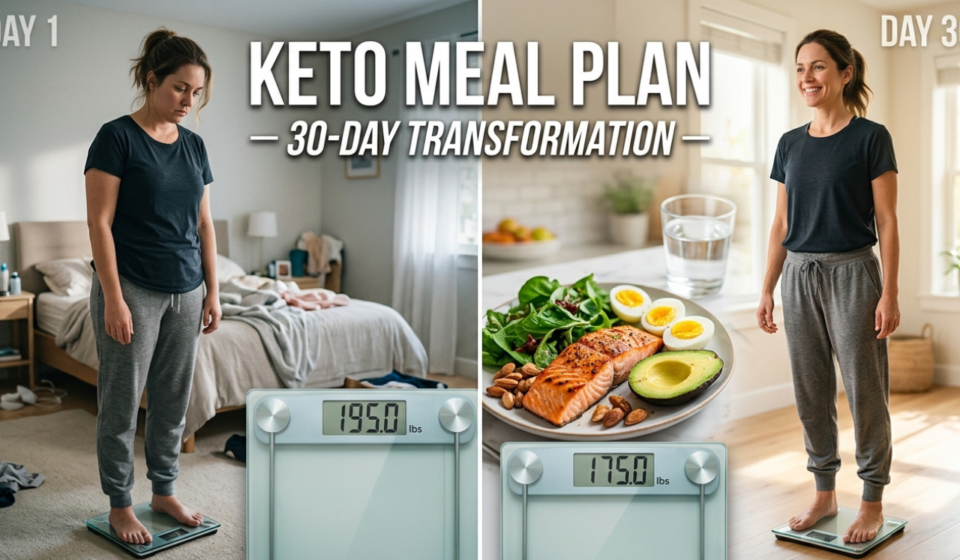

185 pounds. Zero energy. A mirror I avoided.
That was me 30 days before everything changed. I woke up exhausted. I dragged myself through the day on coffee and sugar. By 3 PM, I was a zombie. My doctor said one word that scared me: prediabetic.
I had tried everything. Calorie counting. Low-fat. Skipping meals. Nothing worked — because nothing fixed the real problem.
Then I found a keto meal plan that didn’t just change what I ate. It changed how my body worked.
30 days later, I was 20 pounds lighter.
Not water weight. Not a crash diet. Real, sustainable fat loss — with more energy at 40 than I had at 25.
This isn’t a fairy tale. It’s not a paid ad. It’s the exact keto meal plan I followed, meal by meal, week by week — including the mistakes, the “keto flu,” and the plateau that almost made me quit.
If you’ve been told you need to “just eat less and move more,” you’ve been lied to.
If you’re tired of feeling trapped in a body that doesn’t feel like yours, keep reading.
Because if I could lose 20 pounds in 30 days on a keto meal plan — with a full-time job, a family, and zero gym membership — so can you.
Let me show you exactly how.
The Breaking Point: Why I Needed a Change
Before I dive into the specifics of the ketogenic diet, I need to paint a picture of where I started. Thirty days before I started this journey, I weighed 185 pounds. At 5’6″, that put me in the obese category for my height.
I woke up tired every morning. I drank three cups of coffee just to function, and I crashed every afternoon around 3:00 PM. I had brain fog so thick I couldn’t remember simple words. I was prediabetic, and my doctor warned me that if I didn’t change my lifestyle, medication was in my future.
I knew I needed a drastic change, but I also knew I needed structure. That’s when I stumbled upon the concept of a structured keto meal plan. I had heard of keto before — high fat, low carb — but I never understood the importance of a proper plan. I thought I could just eat bacon and cheese all day. I was wrong.
The key to my success wasn’t just cutting carbs; it was the precise balance of macronutrients and the timing of meals that made the difference. A well-designed keto meal plan removes the guesswork and gives your body exactly what it needs to burn fat.
Understanding the Science: Why Keto Works
To understand how a keto meal plan works, you first have to understand what happens to your body when you deprive it of carbohydrates.
Typically, the human body runs on glucose (sugar) derived from carbohydrates like bread, pasta, and rice. When you eat these foods, your insulin spikes, and your body stores excess energy as fat. It’s a vicious cycle that keeps you hungry and overweight.
A keto meal plan flips this switch. By restricting carbohydrates to under 20–25 grams per day, you force your body into a state called ketosis. In ketosis, your liver starts converting fat into molecules called ketones, which become your primary energy source.
Essentially, you switch your body from running on sugar to running on fat — both the fat you eat and, crucially, the fat stored on your belly, hips, and thighs.
The reason this keto meal plan works so rapidly is water weight and inflammation. The initial drop in weight is often water, as glycogen (stored carbs) holds onto water. However, the subsequent fat loss is real and sustained because your appetite is naturally suppressed by the high satiety of fats and proteins.
Week 1: The "Keto Flu" and the Initial Drop
The first week was the hardest. I won't lie to you. The transition into ketosis is often accompanied by what is known as the "Keto Flu." For the first three days, I felt groggy, irritable, and I had a splitting headache. My body was screaming for sugar.
However, this is where the "ultimate" part of my keto meal plan came in. The plan I followed emphasized electrolyte balance and hydration. Instead of quitting, I drank bone broth, added pink Himalayan salt to my food, and drank gallons of water. By Day 4, the fog lifted.
The Results of Week 1:
- Weight Lost: 7 Pounds
- Energy: Low on days 1–3, skyrocketed on days 4–7
- Digestion: Bloating vanished completely
This initial success was the motivation I needed. Seeing the scale drop 7 pounds in 7 days was a massive psychological win. It was the first proof that my keto meal plan was working. But I knew the real test was yet to come.
Week 2: Fat Adaptation and Mental Clarity
By the second week, my body had officially entered ketosis. I could confirm this with urine strips (though I later stopped using them). The hunger pangs that used to rule my life were gone. I found myself able to skip breakfast without feeling like I was starving.
This is the "magic" phase. I was eating delicious food — steak, eggs, avocados, cheese — and losing weight. The mental clarity was the most surprising benefit. The "brain fog" that had plagued me for years lifted. I was sharper at work, my mood was stable, and I was sleeping like a baby.
What I Ate (My Keto Meal Plan Structure):
- Breakfast: Bulletproof coffee (coffee with MCT oil and grass-fed butter) or a three-egg omelet with spinach and feta
- Lunch: Grilled chicken thighs with a large Caesar salad (no croutons, heavy on the parmesan)
- Dinner: Ribeye steak with asparagus sautéed in butter
- Snacks: Macadamia nuts, pork rinds, or a few slices of cheddar cheese
The Results of Week 2:
- Weight Lost: 5 Pounds (Total: 12 lbs)
- Energy: Consistent, high, and stable all day
- Cravings: Virtually non-existent
Week 3: Breaking the Stall and Pushing Through
Week 3 is where many people quit. The scale stopped moving for about four days. This is a common phenomenon known as the "Keto Plateau." However, because I was following a structured keto meal plan, I had strategies in place.
I realized I was eating too much protein and not enough fat. Protein can convert to glucose in the body via gluconeogenesis, which can kick you out of ketosis. I dialed back the protein slightly and increased my healthy fats — olive oil, avocado, and macadamia nuts.
I also incorporated Intermittent Fasting (IF). I would eat all my meals between 12:00 PM and 8:00 PM. This gave my body a 16-hour window to burn fat without the interference of insulin from food.
Read More...Keto Meal Plan Review 2026: Does Claudia Caldwell’s 30-Day Program Really Work?
The Results of Week 3:
- Weight Lost: 4 Pounds (Total: 16 lbs)
- Body Composition: My clothes were fitting loosely. People at work started asking what I was doing.
Week 4: The Final Push to 20 Pounds
The final week was about maintenance and finishing strong. I was fully fat-adapted, meaning my body was efficiently burning fat for fuel. I had tons of energy for workouts, which I had started incorporating — light weightlifting and walking.
The final push to the 20-pound mark required strict adherence. No "cheat meals," no hidden sugars in sauces. I was a machine. I meal-prepped on Sundays to ensure I never found myself hungry with no options. This preparation is the secret ingredient in any successful keto meal plan.
The Results of Week 4:
- Weight Lost: 4 Pounds (Total: 20 lbs)
- Final Weight: 165 Pounds from 185 Pounds
- Overall Feeling: Unstoppable
The 30-Day Keto Meal Plan Breakdown
To truly show you how this keto meal plan helped me lose 20 pounds in 30 days, I need to give you a sample of the structure. A good plan isn't just about food; it's about timing and consistency.
The Rules:
- Net Carbs: Keep under 20g per day
- Protein: Moderate intake (about 0.8g per lean body mass)
- Fat: High intake (to satiety)
- Hydration: 3–4 liters of water daily
- Electrolytes: Sodium, Potassium, Magnesium
Sample Day of Eating:
- Morning: Bulletproof Coffee
- Lunch: Cobb Salad (Romaine, grilled chicken, bacon, blue cheese, avocado, olive oil)
- Afternoon Snack: Celery sticks with cream cheese
- Dinner: Salmon fillet with broccoli roasted in coconut oil
- Dessert: Sugar-free Jello with heavy whipped cream
The Importance of Meal Prep
If there is one lesson I learned from this keto meal plan, it is that failure to plan is planning to fail. On Day 10, I was stuck at the airport. Everywhere I looked, there were bagels, Cinnabons, and sugary coffee drinks. Had I not prepared a bag of nuts and a protein shake in my bag, I would have caved.
A successful keto meal plan involves cooking in bulk. I would roast a tray of chicken thighs and a tray of vegetables on Sunday. I would boil a dozen eggs. I would portion out nuts. This removed the decision-making process. When I was hungry, I didn't have to think; I just grabbed my keto-friendly food.
Supplements That Supported the Journey
While food is 90% of the battle, supplements helped smooth the transition. To understand how this keto meal plan worked, you must acknowledge the role of supplements in filling nutritional gaps:
- MCT Oil: Provides instant energy and helps boost ketone production
- Exogenous Ketones: I used these in the first few days to help get into ketosis faster
- Electrolytes: Crucial. Keto is a natural diuretic. You lose sodium, potassium, and magnesium rapidly.
- Psyllium Husk: To keep fiber intake up and digestion regular
The Psychological Transformation
The physical weight loss was amazing, but the mental shift was profound. This keto meal plan gave me a sense of control over my body that I had never experienced.
Food no longer controlled me. I used to plan my day around meals; now I planned meals around my day. I no longer felt the urge to snack constantly. The "hangry" monster was gone. This mental clarity allowed me to focus on my career and relationships with a renewed vigor.
Addressing the Critics: Is Keto Safe?
I know there is a lot of controversy surrounding the Ketogenic diet. Many people ask if it is safe to lose 20 pounds in 30 days. The answer is: it depends on your starting point. For someone who is significantly overweight, losing 20 pounds in the first month is not only common but often expected due to the initial water weight loss.
However, my keto meal plan was done under the supervision of my doctor. I got blood work done before and after. My cholesterol levels actually improved (HDL went up, triglycerides went down). My blood pressure normalized. My blood sugar stabilized.
It is important to listen to your body. If you feel dizzy, weak, or unwell, you must adjust your keto meal plan. It's not about starving yourself; it is about nourishing your body with the right fuel.
Common Mistakes to Avoid
If you want to replicate my success with this keto meal plan, avoid these pitfalls:
- Eating Too Much Protein: Excess protein turns into sugar
- Fearing Fat: You must eat fat to burn fat. Low-fat keto is just starvation.
- Not Drinking Enough Water: Dehydration mimics hunger. Drink water first.
- Hidden Carbs: Sauces, dressings, and even some vegetables are high in carbs. Read labels religiously.
- Comparing Your Journey: Your body is different. Some lose 5 pounds a week, others lose 2.
Life After the 30 Days
So, what happened after the 30 days? Did I gain it all back? No. This keto meal plan wasn't a temporary fix; it was an education. I transitioned into a "lazy keto" lifestyle — keeping carbs low but not tracking every single gram.
I kept the weight off for over a year because I changed my habits. I learned that carbohydrates are not essential for survival, but they are delicious. I learned to enjoy them in moderation and then return to my low-carb lifestyle. The keto meal plan taught me how to listen to my hunger signals and how to fuel my body for performance rather than for comfort.
Conclusion: Your Turn to Transform
If you are sitting there, feeling hopeless, wondering if you will ever feel good in your body again, I want you to know that you can. This keto meal plan is proof that the human body is capable of incredible change when given the right environment.
It requires discipline. It requires preparation. It requires saying "no" to the donut in the breakroom. But the result — the energy, the confidence, the health — is worth every single sacrifice.
This is not just my story. It can be your story. The roadmap is here. The science is sound. The only missing piece is your decision to start. Take the leap. You might just be amazed at the person you see in the mirror 30 days from now.
Frequently Asked Questions (FAQ)
1. Can I drink coffee on a keto meal plan?
Yes, coffee is allowed and encouraged. However, it must be black or "Bulletproof" (with added fat). Sugar and milk are strictly prohibited. Heavy cream is allowed in moderation.
2. Do I need to count calories to lose 20 pounds in 30 days?
While calories matter, the Keto diet naturally reduces appetite. Most people find they eat fewer calories without tracking because fat and protein are so filling.
3. What are "Keto Flu" symptoms?
Symptoms include headache, fatigue, nausea, and irritability. It usually lasts 2–3 days. Drinking bone broth or salty water helps significantly.
4. Can I exercise on this keto meal plan?
Yes. In fact, exercise accelerates the results. You may find your performance drops in the first week as your body adapts, but by week 3, you will likely have more endurance than before.
5. Will I gain the weight back after the 30 days?
If you return to your old eating habits, yes. The key to keeping the weight off is transitioning to a maintenance phase where you slowly reintroduce healthy carbs while avoiding processed sugars and grains.
6. Is this diet safe for diabetics?
Keto can be very effective for managing Type 2 diabetes, but it is dangerous for Type 1 diabetics without strict supervision. Consult a doctor before starting.
7. How much water should I drink?
Aim for at least 3 liters (about 100 ounces) of water per day. Keto is diuretic, meaning you flush out water and electrolytes quickly.
8. Can I eat fruit on a keto meal plan?
Most fruits are too high in sugar. Berries (raspberries, blackberries, strawberries) are the exception and can be eaten in small quantities.
9. What is the best sweetener for Keto?
Stevia, Monk Fruit, and Erythritol are the best options. Avoid Maltitol and Sucralose.
10. How do I know if I am in Ketosis?
Signs include dry mouth, increased urination, "keto breath," reduced hunger, and increased energy. You can also test using urine strips or a blood ketone meter.