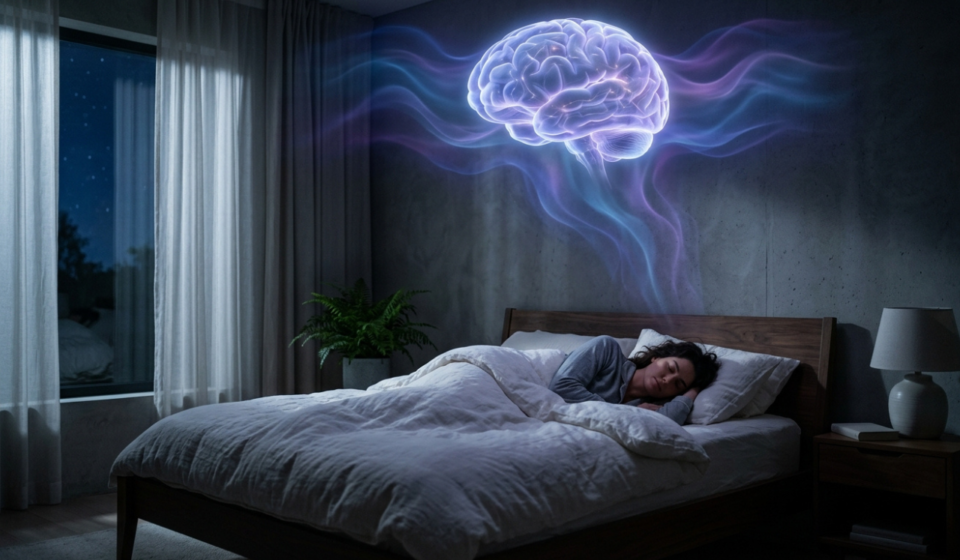

Struggling to fall asleep with a racing mind? This neuroscience-backed sleep hacking method stops overactive brain activity and helps you drift off in 10 minutes—no pills required.
Introduction: Why Your Brain Won’t Shut Up at Night
You know the scene. It’s 2:47 AM. Your body is exhausted, your eyes are heavy, but your brain is hosting a highlight reel of every embarrassing moment from the past decade, while simultaneously drafting tomorrow’s work emails and worrying about that thing you said three years ago. You’re not alone. This is the reality for millions who struggle with an overactive brain at bedtime—a neurological trap where the harder you try to sleep, the more alert you become.
Traditional sleep advice often misses the mark because it treats symptoms, not causes. The real culprit isn’t a lack of sleep hygiene—it’s a neurological misfire. Your brain’s alert system gets stuck in overdrive, flooding your body with cortisol precisely when it should be winding down . This is where sleep hacking comes in—not as a gimmick, but as a scientifically-grounded approach to neurologically resetting your system.
This article explores the neuroscience behind why we can’t sleep, introduces proven sleep hacking techniques like cognitive shuffling, and provides a complete 5-step protocol to help you fall asleep in 10 minutes—without pills or expensive gadgets.
A written protocol that turns evidence-based techniques into a night-by-night plan — instead of trying to remember all 12 from scratch. 60-day guarantee.
See the Full System →The Neuroscience of Sleeplessness: Why 89% of Insomniacs Never Find Lasting Relief
The “Midnight Cortisol Spike”
The fundamental problem for most chronic insomniacs isn’t the environment—it’s the endocrine system. Research has demonstrated that individuals with chronic insomnia show significantly higher midnight salivary cortisol concentrations compared to healthy controls . This indicates a dysregulation of the hypothalamic-pituitary-adrenal (HPA) axis, the body’s central stress response system.
Here’s what happens: when your brain perceives a threat (even if that “threat” is just a racing thought), it activates the HPA axis. Cortisol floods your system, keeping you alert and vigilant. The irony is that the very act of trying to sleep becomes the stressor that prevents sleep. You’re trapped in a neurological feedback loop: racing thoughts trigger cortisol, cortisol keeps your brain alert, alertness generates more thoughts, and more thoughts produce more cortisol.
The Vicious Cycle
This isn’t a willpower problem—it’s a biological one. The traditional advice to “just relax” or “clear your mind” is practically useless against a system designed to keep you alert when it senses danger. Your brain can’t distinguish between a real threat (a predator) and a modern one (a stressful work deadline or relationship anxiety). Both activate the same stress pathways.
Sleep Deprivation: The Health Toll
The stakes are higher than just feeling tired. Chronic sleep deprivation is linked to:
- 3× higher risk of heart disease
- Accelerated brain aging
- Immune dysfunction
- Significantly shortened lifespan
Every night without quality sleep compounds these risks
Read more… Natural Insomnia Remedies That Actually Work: 12 Evidence-Based Options (2026)
Sleep Hacking Method #1: Cognitive Shuffling
One of the most effective, evidence-backed sleep hacking techniques for an overactive mind is cognitive shuffling. Developed by cognitive scientist Dr. Luc Beaudoin of Simon Fraser University, this method works on a deceptively simple principle: instead of trying to empty your mind, you deliberately fill it with random, disconnected images that go nowhere.
How Cognitive Shuffling Works
The technique is formally called “serial diverse imagining.” The goal is to mimic the kind of loose, non-sequential thinking that naturally occurs as the brain drifts toward sleep. When you fall asleep normally, your thoughts become scattered, illogical, and random just before you lose consciousness
The Step-by-Step Process:
- Pick a simple, neutral word. For example, “blanket” or “cookie.”
- Take the first letter (e.g., “C” from cookie).
- Imagine unrelated things that begin with that letter, picturing each briefly before moving on.
- Cookie → C → Cup, Cat, Cloud, Candle, Camera
- When you run dry on one letter, move to the next (O → Orangutan, Owl, Orange, Ocean).
- The crucial rule: The images must not connect into a story. The moment they form a narrative, your brain locks back into goal-directed, problem-solving mode, keeping you awake.
The Evidence
Dr. Beaudoin’s 2016 research, involving 154 university students, found that the group using cognitive shuffling reported improvements in sleep quality, reduced difficulty in falling asleep, and decreased pre-sleep mental arousal . While the evidence base is still modest (and more research is needed), the method’s risk profile is remarkably low—it’s free, has no side effects, and can’t hurt you. At worst, you spend a few minutes picturing bananas. At best, you have a portable tool for a racing mind that works anywhere, no app required.
Why It Works
Cognitive shuffling is engaging enough to hold your attention but too pointless to spark anxiety or planning. It prevents the brain from entering the kind of focused, problem-solving mode that produces stress hormones. By simulating the natural pre-sleep drift, you trick your brain into believing it’s already falling asleep.
Sleep Hacking Method #2: The 5-Step Neurological Protocol
While cognitive shuffling is excellent for occasional racing thoughts, chronic insomnia often requires a more comprehensive approach. The following 5-step sleep hacking protocol targets the specific neurological processes keeping you awake. Each step builds on the last, systematically shutting down your alert system.
Step 1: Neural Reset Protocol (90 Seconds)
Objective: Instantly stop racing thoughts and prepare your brain for sleep mode.
The Technique: Choose a single, neutral word (like the “cookie” in cognitive shuffling). For each letter, generate a random image, but the key difference here is the speed and disconnection. You’re not just picking words—you’re deliberately creating visual images that are vivid but unrelated.
Why it Works: This engages the brain’s visual cortex in a way that’s incompatible with anxious, verbal thought patterns. It’s a cognitive “reboot” that interrupts the worry loop before it can gain traction.
Step 2: Cortisol Shutdown Sequence (3 Minutes)
Objective: Signal your body to stop producing stress hormones.
The Technique: A specific breathing pattern known to activate the parasympathetic nervous system—the “rest and digest” mode. The pattern is:
- Inhale for 4 seconds
- Hold for 7 seconds
- Exhale for 8 seconds (making a gentle “whoosh” sound)
- Repeat for 3 minutes
Why it Works: The extended exhale stimulates the vagus nerve, which lowers heart rate and signals the HPA axis to reduce cortisol production. This is directly counteracting the “midnight cortisol spike” that research has identified as a key feature of chronic insomnia
Step 3: Circadian Calibration (2 Minutes)
Objective: Synchronize your internal clock for natural sleep-wake cycles.
The Technique: Visualize the transition from daylight to darkness. This is a form of guided imagery that signals to your brain that “daytime” is over. You might imagine the sun setting, the sky darkening, and lights in your house gradually dimming.
Why it Works: The brain’s pineal gland produces melatonin when light is absent. By mentally simulating darkness (even if your room isn’t perfectly dark), you can trigger the initial neurochemical cascade that leads to sleep. This complements the physical environment upgrades (like blackout curtains) that can also help.
Step 4: Deep Sleep Activation (2 Minutes)
Objective: Trigger your brain’s natural sleep chemicals—more effective than melatonin alone.
The Technique: Progressive muscle relaxation combined with temperature visualization. Starting from your toes and moving upward, consciously relax each muscle group while imagining a warm, heavy blanket slowly covering your body.
Why it Works: This combination reduces physical tension (which is both a symptom and a cause of alertness) and promotes the transition from wakefulness to sleep onset. The sensation of warmth is associated with the drop in core body temperature that naturally precedes sleep
Step 5: REM Optimization (2 Minutes)
Objective: Ensure restorative deep sleep and genuine refreshment when you wake.
The Technique: A final round of random, disconnected imagery, similar to cognitive shuffling, but specifically focused on “safe” images (like a calm beach, a quiet forest, or a cozy fireplace). The emphasis is on peace and safety.
Why it Works: This prevents the early-morning cortisol spike that often wakes chronic insomniacs prematurely. By maintaining a state of mental calm as you drift into deeper sleep, you’re more likely to stay asleep and reach the REM stages needed for genuine restoration.
Read more…How to Fall Asleep With Racing Thoughts
The Science of Circadian Rhythm Hacking
Beyond specific techniques, understanding your circadian rhythm is essential for effective sleep hacking.
Understanding Your Internal Clock
Your body has an internal clock that regulates when you sleep and wake. Originally believed to run on a 25-hour cycle, it’s actually about 24.2 hours without artificial light . The problem is modern life—especially blue light from screens—disrupts this system.
The Opponent Process Model
This model explains why you can be tired but unable to sleep :
- Sleep Drive builds up the longer you’re awake. The more sleep debt you accumulate, the sleepier you should feel.
- Clock-Dependent Alerting counteracts sleep drive, producing two peaks of alertness—one in the morning and another in the evening. This is why you often feel wide awake at 11 PM despite being exhausted at 2 PM.
Light and Melatonin
Light is the primary driver of your circadian rhythm. The eyes contain specialized ganglion cells (separate from rods and cones) that detect light and signal the pineal gland to suppress melatonin production . This is why screen time before bed is so damaging.
Circadian Hacking Tactics:
- Light Therapy: Expose yourself to bright light early in the morning.
- Darkness Therapy: Dim lights and avoid screens at least one hour before bed.
- Melatonin Timing: Low doses (0.5 mg) several hours before bed can shift your circadian rhythm, while high doses (3-10 mg) act as a sedative but can cause morning grogginess and tolerance .
A structured 5-step protocol built around the actual physiology behind hyperarousal — not generic “relax more” advice.
Common Sleep Hacking Mistakes to Avoid
Even with the right techniques, several common mistakes can sabotage your sleep hacking efforts.
1. Trying to Force Sleep
The more you try to sleep, the less likely you are to succeed. Sleep isn’t something you “do”—it’s something that happens when the conditions are right. If you can’t sleep after 20 minutes, get out of bed and do something calming (read, listen to soft music) until you feel drowsy .
2. Ignoring Sleep Drive
ou can’t build up sleep debt indefinitely without consequences. While some advocate for extreme sleep hacking (like polyphasic sleep schedules with as little as 2-3 hours per day), these approaches are dangerous and have been described by sleep experts like Dr. Matthew Walker as a form of “slow brain suicide” . Aim for consistency in your sleep schedule, not drastic reductions.
3. Poor Sleep Hygiene
Even the best sleep hacking protocol won’t work if your environment is working against you. Key principles:
- Use the bed for sleep and sex only
- Block out light and sound (white noise can help)
- Avoid alcohol and caffeine 6 hours before bed
- Exercise in the morning or late afternoon, not right before bed
- Keep the bedroom cool (around 65°F/18°C)
4. Over-reliance on Supplements
While supplements like GABA, L-theanine, and tryptophan can support relaxation, they shouldn’t be a crutch . They work best when combined with behavioral changes, not as a replacement for them.
5. Digital Overload Before Bed
It’s not just about blue light. Endless scrolling on social media keeps your brain engaged in problem-solving mode. Every new post, headline, or notification introduces something new, scattering your attention and keeping you alert . If you must use a device, minimize screen brightness, enable night mode, and stick to calming content like audiobooks or gentle bedtime stories.
6. The “Perfect Sleep” Trap
Chasing perfect sleep often creates more anxiety. Sleep is naturally variable—occasional wakefulness is normal. In fact, “night waking” is a natural survival instinct from our evolutionary past . Instead of panicking when you wake up, accept it, relax, and use a sleep hacking technique like cognitive shuffling to drift back off.
7. Worrying About the Clock
Watching the clock creates anxiety that keeps you awake. Turn the clock away from you. If you need to check the time, do it only to confirm it’s time to get up, not to calculate how much sleep you’re “losing.”
Building Your Complete Sleep Hacking Routine
A 21-day plan to transform your sleep using these techniques:
Week 1: Foundation
- Establish a consistent sleep-wake time (even on weekends)
- Implement basic sleep hygiene: dark, cool, quiet room
- Start a pre-sleep wind-down ritual 30 minutes before bed
- Practice cognitive shuffling when you first get into bed
Week 2: Neurological Techniques
- Add the 5-step sleep protocol to your routine
- Incorporate breathing exercises (Step 2) to lower cortisol
- Experiment with digital detox—no screens one hour before bed
Week 3: Optimization
- Adjust timing and sequence based on what works for you
- Track your sleep (not obsessively, just note quality)
- Identify and eliminate remaining disruptions
Frequently Asked Questions About Sleep Hacking
Q: Is sleep hacking just another fad?
A: No—while the term “sleep hacking” has been somewhat co-opted by marketing, the underlying techniques are grounded in legitimate neuroscience and sleep science. Cognitive shuffling, for example, is based on peer-reviewed research . The key is distinguishing between genuine, evidence-based hacks and gimmicks.
Q: Does cognitive shuffling work for everyone?
A: It works best for people whose primary problem is an overactive mind, not those with clinical sleep disorders. It’s a good tool for ordinary, occasional overthinking, but it’s not a treatment for severe clinical insomnia . That requires structured support like Cognitive Behavioral Therapy for Insomnia (CBT-I) or medical evaluation.
Q: Can I combine these techniques with my current sleep medication?
A: Yes—sleep hacking techniques are designed to be compatible with existing medications and medical treatments. However, always consult with your healthcare provider before making significant changes to your sleep routine or medication regimen. Some methods (like the 5-step protocol) may eventually reduce your reliance on medications, but this should be done under medical supervision.
Q: Why do I wake up at 3 AM every night?
A: This is a classic sign of a “midnight cortisol spike” . It indicates dysregulation of the HPA axis. The 5-step sleep protocol, especially Steps 2 and 3 (Cortisol Shutdown and Circadian Calibration), are specifically designed to address this. In some cases, it can also be related to other medical conditions like blood sugar imbalances, so if it persists, consult a doctor.
Q: How long until I see results?
A: Some people experience improvement the very first night. For others with chronic insomnia, it typically takes 7-14 days of consistent practice to see significant changes. A full transformation often occurs over 21 days, which is why many sleep hacking programs include a 3-week implementation plan.
Q: Is melatonin supplementation necessary?
A: No—and it may be counterproductive. The goal of sleep hacking is to retrain your brain’s natural sleep system, not replace it with external substances. Melatonin can be useful for phase shifts (like jet lag), but for chronic insomnia, it’s often better to rely on natural production enhanced by proper darkness and the techniques described above.
Read More…Why Can’t I Sleep Even When Tired? 8 Real Reasons (2026)
Conclusion: Your Path to Sleep Freedom
Sleep is not a passive process—it’s an active state that your brain must be guided into. When your brain is overactive, forcing it into submission rarely works. Sleep hacking isn’t about fighting your brain; it’s about tricking it, guiding it, and creating the conditions where sleep can naturally occur.
Whether you choose cognitive shuffling for a quick fix or commit to the complete 5-step protocol, the science is clear: you can quiet an overactive brain and fall asleep in minutes, not hours. The key is understanding what’s actually happening in your brain at night and addressing the neurological root cause, not just the symptoms.
Tonight, instead of lying awake for hours, try the cognitive shuffle—pick a random word and let your mind wander aimlessly. It might just be the best night’s sleep you’ve had in years.
A written protocol that turns evidence-based techniques into a night-by-night plan — instead of trying to remember all 12 from scratch. 60-day guarantee.
See the Full System →